
Rheumatoid Surgery
Rheumatoid Surgery
Rheumatoid arthritis (RA) is a chronic inflammatory disease that attacks the joints. In severe cases, surgery may be necessary to improve function, reduce pain, and correct joint deformity. There are several types of rheumatoid surgery, each with its own benefits and risks.
The decision of whether or not to have rheumatoid surgery is a complex one that should be made in consultation with a doctor. Factors to consider include the severity of the RA, the location of the affected joints, and the patient's overall health.
How Rheumatoid Surgery works:
The procedure is conducted under the guidance of highly experienced specialists.
Who needs Rheumatoid Surgery?
This treatment is recommended for patients diagnosed with specific conditions.
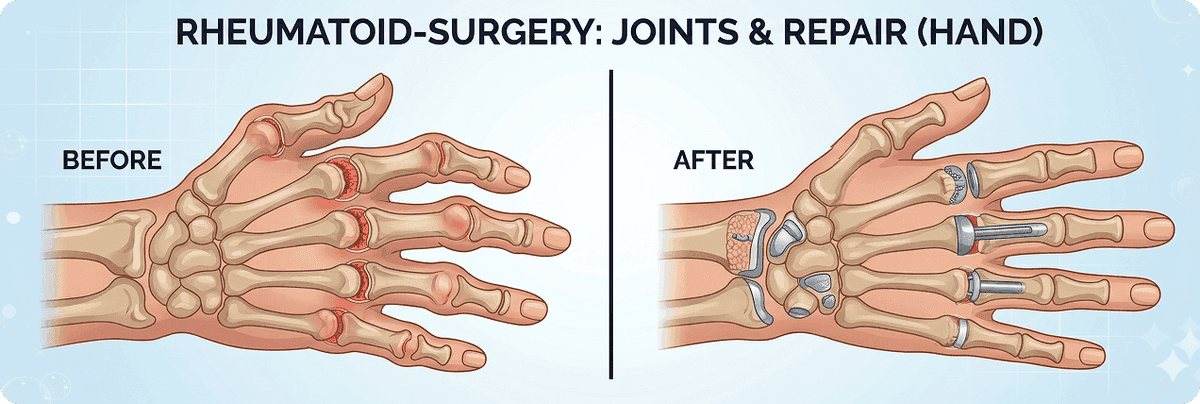
Synovectomy: This surgery removes the inflamed synovial tissue lining the joint. This can help reduce pain and improve joint function. However, there is a chance that the inflammation may come back, and the surgery may not be effective for all joints.
Tendon repair: If tendons around a joint become inflamed and damaged, they may rupture. Surgery can be performed to repair the tendons and improve joint function.
Joint debridement: This surgery removes damaged cartilage and bone from a joint. It can help to relieve pain and improve joint function, but it may not be a long-term solution. Joint debridement surgery
Arthroplasty (joint replacement): In severe cases of RA, the entire joint may need to be replaced with an artificial joint (prosthesis). This surgery can be very effective in relieving pain and improving joint function.
Arthrodesis (joint fusion): This surgery fuses the bones of a joint together to eliminate pain and improve stability. This is typically used as a last resort after other treatments have failed, as it eliminates movement in the joint.
Recovery Timeline:
Recovery times vary depending on the patient's age and overall health status.
Clinical Monitoring: Immediate post-operative care with constant tracking of vital stats.
Rehabilitation: Tailored physical therapies to promote systemic healing.
Risks and complications:
As with all clinical surgical treatments, there are standard associated parameters to consider:
Minor localized discomfort
Mild inflammatory responses
Our clinical coordinators are available to answer all questions regarding your diagnosis, recovery pathways, and clinical pricing structures in India.

Meet Our Other Related Doctors
Our Trusted Network of India's Top Hospitals
We partner with top-tier hospitals across India, ensuring world-class infrastructure, expert specialists, and internationally recognized standards of care - so you receive safe, reliable, and high-quality treatment at every step.
Real Stories of Care and Recovery
Hear from patients who trusted us with their care and experienced successful treatment journeys with confidence and support.

From the very first moment, he were proactive and truly attentive. He immediately reached out to me personally, called me to understand my situation in detail, and took the time to clarify every single question I had. I ...
98%
Of Patients Recommended NoorMedicare