
Pacemaker
Pacemaker
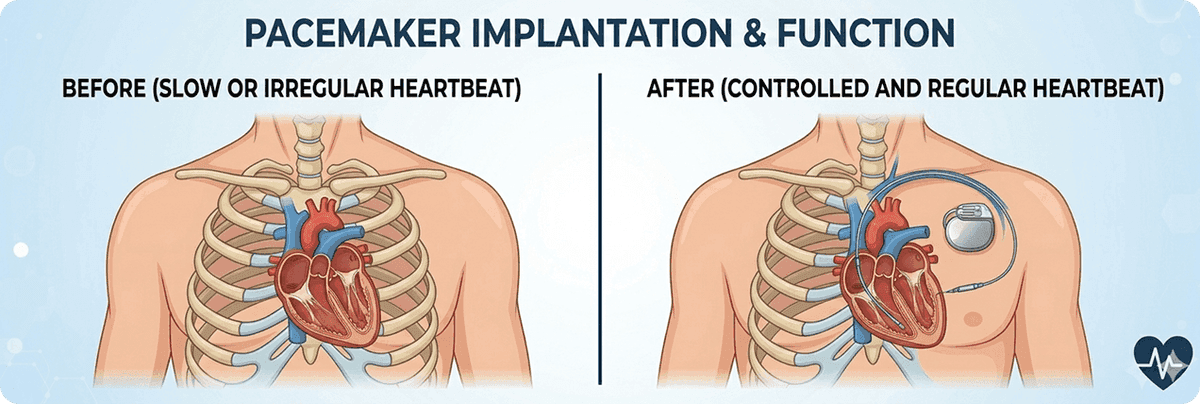
The pacemaker constantly monitors your heart rate. If it detects a slow heartbeat, it sends electrical pulses to your heart muscles to stimulate contractions and get your heart beating at a normal rhythm.
Here are the different parts of a traditional pacemaker:
There are two main types of pacemakers:
Pacemaker implantation is a minor surgical procedure usually performed under local anesthesia. The doctor makes a small incision in your chest or abdomen, inserts the pacemaker, and connects the leads to your heart. The incision is then closed with stitches.
You'll likely be able to go home the same day or the next day after pacemaker implantation. Your doctor will schedule follow-up appointments to monitor your pacemaker and make adjustments to its settings as needed. With proper care, most pacemakers can last for several years before the battery needs to be replaced.
How Pacemaker works:
The procedure is conducted under the guidance of highly experienced specialists.
Who needs Pacemaker?
This treatment is recommended for patients diagnosed with specific conditions.
Pulse generator: This is the main body of the pacemaker, which houses the battery and electronic circuitry.
Leads (electrodes): These are thin, insulated wires that deliver electrical signals from the pulse generator to your heart muscle.
Sensors: These monitor your heart's natural electrical activity and send signals to the pulse generator to determine whether pacing is needed.
Single-chamber pacemaker: This type of pacemaker has one or two leads placed in an upper or lower chamber of your heart. It's used to treat slow heart rhythms in one chamber of the heart.
Dual-chamber pacemaker: This type of pacemaker has leads placed in both the upper and lower chambers of your heart. It's used to coordinate the contractions of both chambers, which can improve blood flow throughout your body.
Recovery Timeline:
Recovery times vary depending on the patient's age and overall health status.
Clinical Monitoring: Immediate post-operative care with constant tracking of vital stats.
Rehabilitation: Tailored physical therapies to promote systemic healing.
Risks and complications:
As with all clinical surgical treatments, there are standard associated parameters to consider:
Minor localized discomfort
Mild inflammatory responses
Our clinical coordinators are available to answer all questions regarding your diagnosis, recovery pathways, and clinical pricing structures in India.

Meet Our Other Related Doctors
Our Trusted Network of India's Top Hospitals
We partner with top-tier hospitals across India, ensuring world-class infrastructure, expert specialists, and internationally recognized standards of care - so you receive safe, reliable, and high-quality treatment at every step.
Real Stories of Care and Recovery
Hear from patients who trusted us with their care and experienced successful treatment journeys with confidence and support.

From the very first moment, he were proactive and truly attentive. He immediately reached out to me personally, called me to understand my situation in detail, and took the time to clarify every single question I had. I ...
98%
Of Patients Recommended NoorMedicare