
Fractures
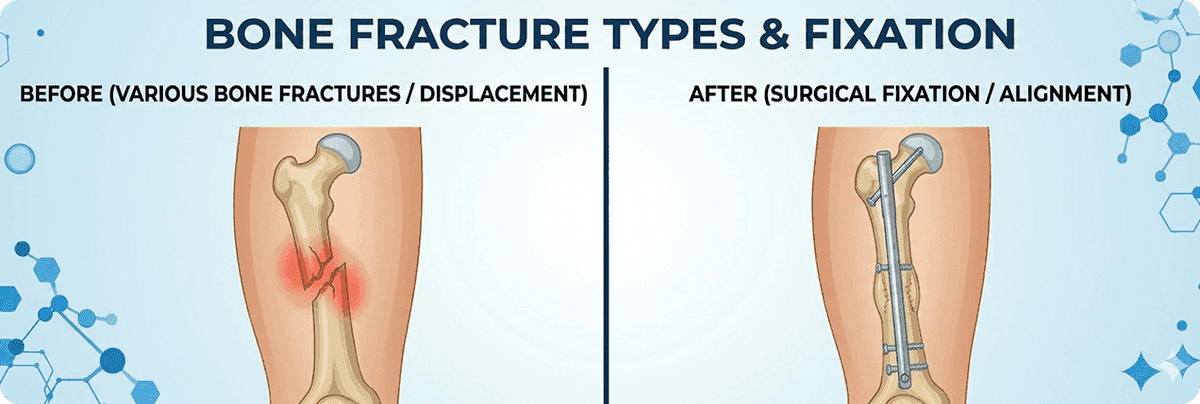
Fractures
A fracture is a break in the continuity of a bone. Fractures can occur due to a sudden impact, overuse, or underlying medical conditions that weaken bones. They can range from minor hairline cracks to complete breaks where the bone is separated into two or more pieces.
Here are some of the common causes of fractures:
Types of fractures:
There are different ways to classify fractures, depending on the severity, location, and appearance of the break. Here are some of the most common types:
How Fractures works:
The procedure is conducted under the guidance of highly experienced specialists.
Symptoms of a fracture
The symptoms of a fracture can vary depending on the severity of the break and the location of the injury. However, some common symptoms include:
Falls: This is the most common cause of fractures, especially in older adults.
Motor vehicle crashes: Car accidents, motorcycle accidents, and bicycle accidents can all cause fractures.
Sports injuries: Fractures are common in athletes who participate in contact sports or high-impact activities.
Overuse injuries: Stress fractures can occur from repetitive stress on a bone, such as in runners or dancers.
Osteoporosis: This is a condition that weakens bones and makes them more susceptible to fractures.
Closed fracture (simple fracture): The broken bone does not pierce the skin.
Open fracture (compound fracture): The broken bone breaks through the skin, creating an open wound. Open fractures are more serious because they are more likely to become infected.
Comminuted fracture: The bone is shattered into multiple pieces.
Transverse fracture: The break is straight across the bone.
Oblique fracture: The break is angled across the bone.
Spiral fracture: The break spirals around the bone. This type of fracture is often caused by a twisting force.
Avulsion fracture: A small piece of bone is pulled away from the main bone by a ligament or tendon.
Stress fracture: A small crack in the bone caused by repetitive stress. Stress fractures are common in the lower leg, foot, and ankle.
Point: Pain
Point: Swelling
Point: Bruising
Point: Deformity of the bone
Point: Difficulty moving the injured limb
Point: Grinding sensation with movement (crepitus)
Point: Treatment for fractures: The treatment for a fracture will depend on the type of fracture, the severity of the break, and the location of the injury. In many cases, fractures can be treated with non-surgical methods, such as:
Immobilization: A cast, splint, or brace will be used to immobilize the bone and allow it to heal.
Pain medication: Medication can be used to help manage pain.
Physical therapy: Physical therapy can help to restore strength, mobility, and range of motion to the injured area.
Point: The bones are not aligned properly
Point: The fracture is unstable
Point: There is damage to nerves or blood vessels
Point: The fracture is in a location that makes it difficult to heal with a cast or splint
Detail: If you think you may have a fracture, it is important to see a doctor right away for proper diagnosis and treatment. Early diagnosis and treatment can help to prevent complications and promote healing.For more details connect with us
Recovery Timeline:
Recovery times vary depending on the patient's age and overall health status.
Clinical Monitoring: Immediate post-operative care with constant tracking of vital stats.
Rehabilitation: Tailored physical therapies to promote systemic healing.
Risks and complications:
As with all clinical surgical treatments, there are standard associated parameters to consider:
Minor localized discomfort
Mild inflammatory responses
Our clinical coordinators are available to answer all questions regarding your diagnosis, recovery pathways, and clinical pricing structures in India.

Meet Our Other Related Doctors
Our Trusted Network of India's Top Hospitals
We partner with top-tier hospitals across India, ensuring world-class infrastructure, expert specialists, and internationally recognized standards of care - so you receive safe, reliable, and high-quality treatment at every step.
Real Stories of Care and Recovery
Hear from patients who trusted us with their care and experienced successful treatment journeys with confidence and support.

From the very first moment, he were proactive and truly attentive. He immediately reached out to me personally, called me to understand my situation in detail, and took the time to clarify every single question I had. I ...
98%
Of Patients Recommended NoorMedicare