
Atherectomy
Atherectomy
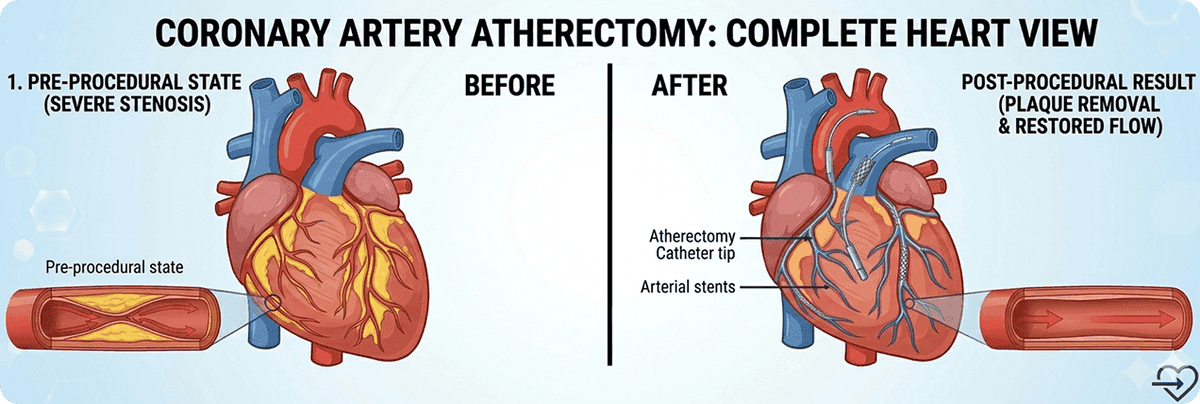
Atherectomy is a minimally invasive procedure used to remove plaque buildup from arteries that are narrowed or blocked. It's often used as an alternative to angioplasty, particularly for treating peripheral artery disease (PAD).
Here's a breakdown of atherectomy:
Procedure
The procedure is conducted under the guidance of highly experienced specialists.
Who is it for?
If you have any questions about atherectomy, it's important to talk to your doctor. They can discuss if this procedure is right for you based on your specific condition.
Point: Clears blocked arteries by removing plaque buildup.
Point: Improves blood flow and relieves symptoms like leg pain and cramping caused by PAD.
Point: A thin, flexible tube called a catheter is inserted into an artery in the groin or arm.
Point: The catheter is threaded up to the blocked artery.
Scrape away: Depending on the type of atherectomy, a special tool at the catheter tip is used to: the plaque buildup. Dissolve the plaque with a laser. Break up the plaque with a rotating device.
Scrape away: the plaque buildup.
Dissolve: the plaque with a laser.
Break up: the plaque with a rotating device.
Point: The removed plaque particles are then flushed away through the bloodstream.
Point: Atherectomy is typically recommended for people with PAD who have significant blockages that are not easily treated with angioplasty.
Recovery
Point: Atherectomy is typically performed on an outpatient basis, meaning you can go home the same day.
Point: Recovery time is usually short, with most people returning to normal activities within a few days.
Risks
As with all clinical surgical treatments, there are standard associated parameters to consider:
Can be more effective than angioplasty for some types of blockages.
Less likely to require a stent placement compared to angioplasty.
As with any procedure, there are potential risks like bleeding, infection, and damage to the artery.
Blood clots can also form during the procedure.
Our clinical coordinators are available to answer all questions regarding your diagnosis, recovery pathways, and clinical pricing structures in India.

Meet Our Other Related Doctors
Our Trusted Network of India's Top Hospitals
We partner with top-tier hospitals across India, ensuring world-class infrastructure, expert specialists, and internationally recognized standards of care - so you receive safe, reliable, and high-quality treatment at every step.
Real Stories of Care and Recovery
Hear from patients who trusted us with their care and experienced successful treatment journeys with confidence and support.

From the very first moment, he were proactive and truly attentive. He immediately reached out to me personally, called me to understand my situation in detail, and took the time to clarify every single question I had. I ...
98%
Of Patients Recommended NoorMedicare