
ASD (Atrial Septal Defect) Closure
ASD (Atrial Septal Defect) Closure
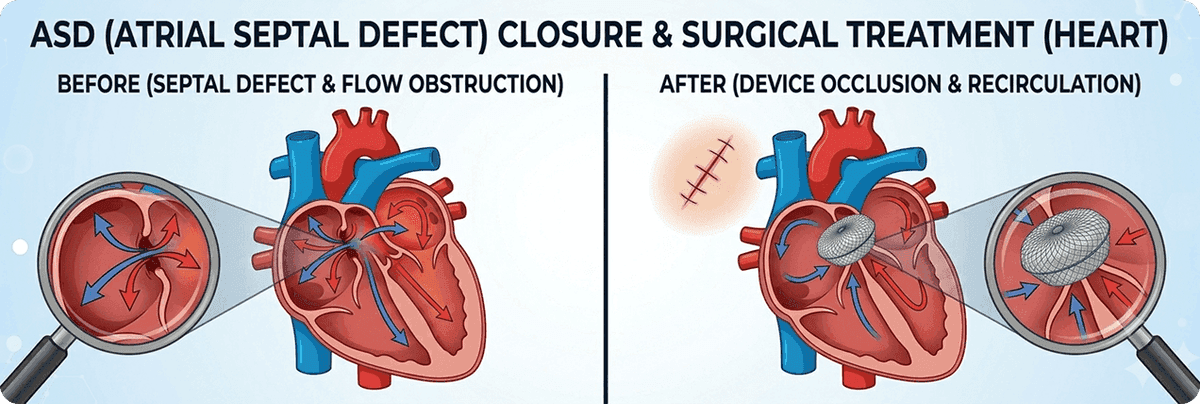
Atrial septal defect (ASD) is a congenital heart defect, meaning you're born with it. It occurs when there's an abnormal opening in the wall (septum) that separates the upper chambers of the heart, the atria (singular: atrium). In a normal heart, the septum keeps blood flow separated between the right and left sides.
Types of atrial septal defects
There are several types of ASDs, classified based on their location in the atrial septum:
Symptoms of atrial septal defect
Small ASDs often cause no noticeable symptoms and may be incidentally discovered during an examination for another reason. Larger ASDs can cause symptoms, especially in adults, such as:
Patent foramen ovale (PFO): This is the most common type of ASD. A small opening in the septum that normally closes shortly after birth can persist in some people without causing any problems. Most people with PFO never experience any symptoms.
Ostium secundum defect: This is a hole in the mid-portion of the atrial septum.
Ostium primum defect: This defect involves a lower location in the septum, closer to the heart valves. It may also involve abnormalities in the mitral valve and tricuspid valve.
Sinus venosus defect: This rare type of ASD occurs near the junction of the superior vena cava (vein carrying blood from the upper body) and the right atrium.
Coronary sinus defect: This is another rare type of ASD located close to the coronary sinus (vein draining blood from the heart muscle).
Point: Shortness of breath, especially with exertion
Point: Fatigue
Point: Palpitations (irregular heartbeat)
Point: Chest discomfort
Point: In severe cases, signs of heart failure (fluid buildup in the body)
Detail: Doctors can diagnose ASD using various tests, including:
Echocardiogram (echo): This uses sound waves to create images of the heart, allowing visualization of the ASD and assessment of blood flow through the defect.
Chest X-ray: While not definitive for ASD, it may show an enlarged heart in some cases.
Electrocardiogram (ECG): This measures electrical activity of the heart and may show signs of abnormal heart rhythm.
Cardiac catheterization: In some cases, a thin tube is inserted into a heart chamber to measure pressures and oxygen levels within the heart, which can help confirm the ASD and assess its severity.
Detail: Treatment for ASD depends on the size and location of the defect, as well as presence or absence of symptoms. Here are some treatment approaches:
No treatment: Small ASDs, especially those causing no symptoms, may not require any specific treatment. Regular monitoring by your doctor is important.
Catheter closure: For suitable ASDs, a minimally invasive procedure using a catheter-based device can be used to close the defect. The device is inserted through a leg vein and guided to the heart to plug the hole.
Surgical closure: Open-heart surgery with cardiopulmonary bypass may be necessary for some complex ASDs or those not amenable to catheter closure. The surgeon will directly repair the opening in the atrial septum.
Detail: With proper diagnosis and treatment, most people with ASD can live long and healthy lives. Early closure of ASDs, especially larger defects, is important to prevent complications like pulmonary hypertension (high blood pressure in the lungs) that can develop over time.
Detail: If you have any concerns about a possible heart defect, consult our doctor. Early diagnosis and treatment can improve outcomes and overall heart health.
Recovery Timeline:
Recovery times vary depending on the patient's age and overall health status.
Clinical Monitoring: Immediate post-operative care with constant tracking of vital stats.
Rehabilitation: Tailored physical therapies to promote systemic healing.
Risks and complications:
As with all clinical surgical treatments, there are standard associated parameters to consider:
Minor localized discomfort
Mild inflammatory responses
Our clinical coordinators are available to answer all questions regarding your diagnosis, recovery pathways, and clinical pricing structures in India.

Meet Our Other Related Doctors
Our Trusted Network of India's Top Hospitals
We partner with top-tier hospitals across India, ensuring world-class infrastructure, expert specialists, and internationally recognized standards of care - so you receive safe, reliable, and high-quality treatment at every step.
Real Stories of Care and Recovery
Hear from patients who trusted us with their care and experienced successful treatment journeys with confidence and support.

From the very first moment, he were proactive and truly attentive. He immediately reached out to me personally, called me to understand my situation in detail, and took the time to clarify every single question I had. I ...
98%
Of Patients Recommended NoorMedicare