
Aortofemoral Bypass Surgery
Aortofemoral Bypass Surgery
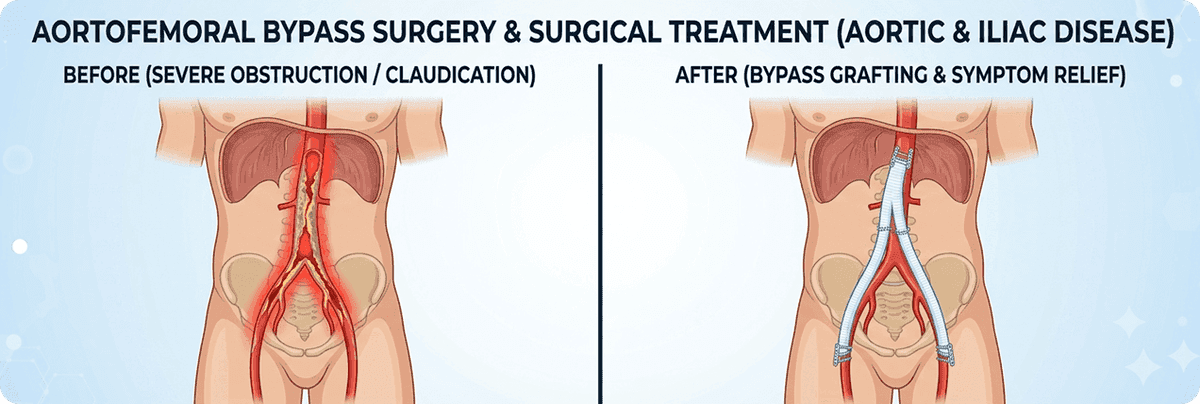
Aortofemoral bypass surgery, also called aorto-bifemoral bypass, is a surgical procedure to improve blood flow to the legs by bypassing narrowed or blocked arteries in the abdomen and groin.
Procedure for aortofemoral bypass surgery
Aortofemoral bypass surgery is a major procedure typically performed under general anesthesia. Here's a simplified outline of the steps involved:
Who needs aortofemoral bypass surgery?
This surgery is typically performed when a person has peripheral arterial disease (PAD), a condition that causes narrowing of the arteries in the legs due to plaque buildup. Reduced blood flow to the legs can lead to various problems, including:
Claudication: This is leg pain that typically occurs in the muscles of the calves, thighs, or buttocks during activity and improves with rest. It's a common symptom of PAD.
Rest pain: In severe cases, pain can even occur at rest, especially at night, and may be worse when the leg is elevated.
Skin sores (ulcers): Poor blood flow can lead to difficulty healing wounds, and ulcers can develop on the legs or feet.
Gangrene: In the most severe cases, tissue death (gangrene) can occur due to lack of blood flow, potentially leading to leg amputation.
Detail: Aortofemoral bypass surgery is not a first-line treatment for PAD. Lifestyle changes, medications, and minimally invasive procedures like angioplasty and stenting may be tried first. However, surgery may be recommended if:
Point: You have severe claudication that significantly limits your walking ability and quality of life.
Point: You have rest pain or ulcers that are not healing or worsening.
Point: You have gangrene.
Incision: A surgical incision is made in the groin or abdomen, depending on the surgeon's approach.
Graft selection: A graft material, typically a synthetic tube made of Dacron, is chosen.
Aorta access: The surgeon accesses the aorta, the main artery carrying blood away from the heart.
Femoral artery access: The surgeon exposes the blocked or narrowed femoral arteries in the groin area.
Graft placement: One end of the graft is sewn onto the aorta above the blockage. The other end is sewn onto the femoral artery below the blockage, creating a bypass for blood flow to travel around the narrowed or blocked section.
Closure: Once the graft is in place, the blood flow through the bypass is checked. The incision is then closed with sutures or staples.
Recovery from aortofemoral bypass surgery
After surgery, you will typically stay in the hospital for several days for monitoring and recovery. Recovery at home can take weeks to months, depending on your individual health and the complexity of the surgery. Here are some key aspects of recovery:
Pain management: Medication will be provided to manage pain and discomfort after surgery.
Wound care: The incision site will need to be kept clean and dry to promote healing.
Physical therapy: Rehabilitation is crucial to regain strength, improve circulation, and restore walking ability.
Medication: You may need medications to manage cholesterol, blood pressure, and prevent blood clots.
Lifestyle changes: Maintaining a healthy lifestyle with a balanced diet, regular exercise, smoking cessation, and good diabetes control (if diabetic) are vital for long-term vascular health and reducing the risk of future blockages.
Risks and complications of aortofemoral bypass surgery
As with any major surgery, there are risks and complications associated with aortofemoral bypass surgery, such as:
Bleeding
Infection
Stroke
Blood clots
Kidney problems
Leg pain or swelling
Leakage or blockage of the graft
Death (although rare)
If you have been diagnosed with PAD and a doctor recommends aortofemoral bypass surgery, it's important to discuss the risks and benefits thoroughly. We can help you understand if this surgery is the right treatment approach for you and address any questions you may have.
Our clinical coordinators are available to answer all questions regarding your diagnosis, recovery pathways, and clinical pricing structures in India.

Meet Our Other Related Doctors
Our Trusted Network of India's Top Hospitals
We partner with top-tier hospitals across India, ensuring world-class infrastructure, expert specialists, and internationally recognized standards of care - so you receive safe, reliable, and high-quality treatment at every step.
Real Stories of Care and Recovery
Hear from patients who trusted us with their care and experienced successful treatment journeys with confidence and support.

From the very first moment, he were proactive and truly attentive. He immediately reached out to me personally, called me to understand my situation in detail, and took the time to clarify every single question I had. I ...
98%
Of Patients Recommended NoorMedicare