
Angioplasty
Angioplasty
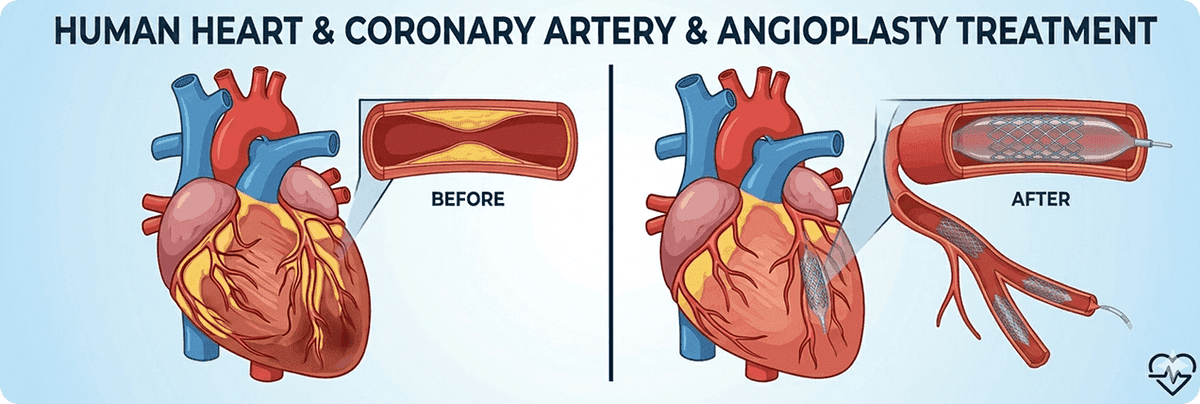
Angioplasty is a minimally invasive procedure that widens narrowed or blocked arteries. It is a common treatment for coronary artery disease (CAD), which is caused by a buildup of plaque in the arteries that supply blood to the heart.
During angioplasty, a thin, flexible tube called a catheter is inserted into an artery in the groin or arm and threaded up to the blocked artery. A tiny balloon at the tip of the catheter is then inflated, which compresses the plaque and widens the artery. In some cases, a small mesh tube called a stent is placed in the artery to help keep it open.
Angioplasty is a safe and effective procedure that can help improve blood flow to the heart and relieve symptoms of angina (chest pain). It is usually performed on an outpatient basis, which means that you can go home the same day as the procedure.
How Angioplasty works:
The procedure is conducted under the guidance of highly experienced specialists.
Who needs Angioplasty?
This treatment is recommended for patients diagnosed with specific conditions.
Specialist Diagnosis: Thorough clinical assessments to identify structural issues.
Precision Surgery: The main corrective procedure, utilizing protocols whenever appropriate.
Recovery Timeline:
Recovery times vary depending on the patient's age and overall health status.
Clinical Monitoring: Immediate post-operative care with constant tracking of vital stats.
Rehabilitation: Tailored physical therapies to promote systemic healing.
Risks and complications:
As with all clinical surgical treatments, there are standard associated parameters to consider:
Minor localized discomfort
Mild inflammatory responses
Our clinical coordinators are available to answer all questions regarding your diagnosis, recovery pathways, and clinical pricing structures in India.